Beyond Prediction
Why Your AI Strategy is Stuck in "Pilot Purgatory" (And How Agentic AI Fixes It)
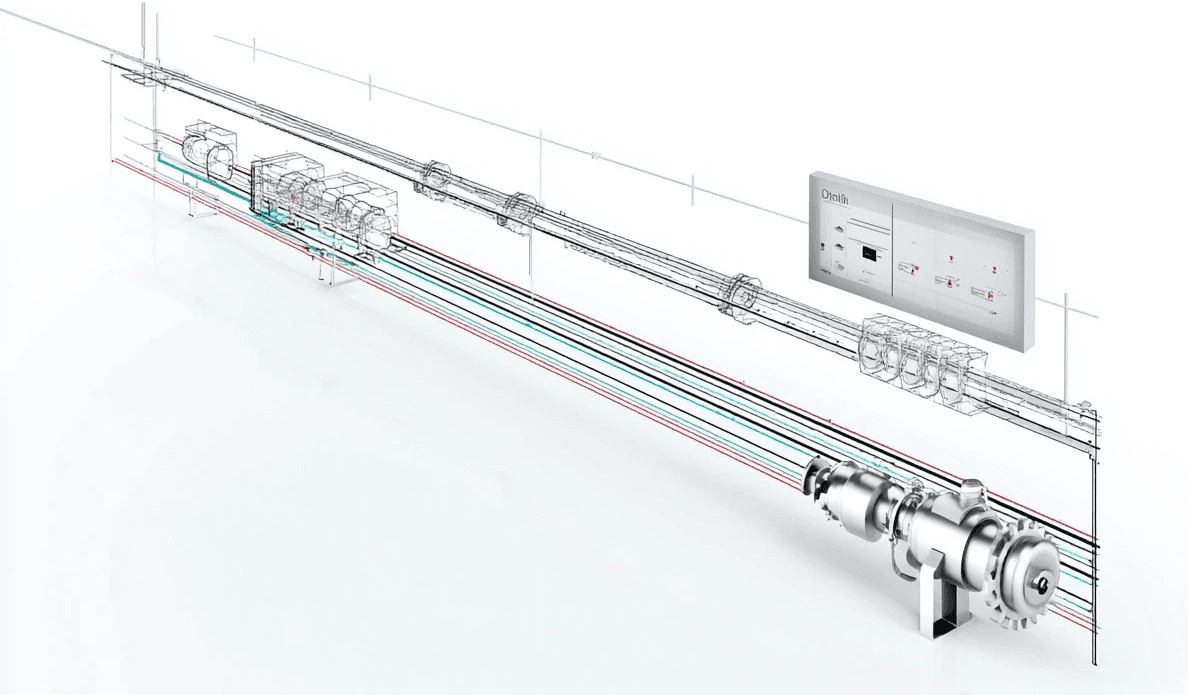
For the last decade, the manufacturing sector has been promised a revolution. We were told that "Industry 4.0" and predictive maintenance (PdM) would eliminate downtime and streamline operations. Yet, as we enter 2026, the reality is starkly different. While 92% of industrial enterprises are investing in AI, only a fraction have successfully scaled these initiatives beyond the pilot phase. Most are trapped in "Pilot Purgatory"—stuck with impressive dashboards that tell them what is breaking, but leaving the complex burden of deciding what to do about it squarely on human shoulders.
The problem isn't a lack of data; it's a lack of agency.
Traditional predictive models are passive. They generate alerts—"Bearing failure likely in 48 hours"—but they cannot reason, plan, or negotiate. They require a human to interpret the alert, check spare parts inventory, schedule the downtime, and assign a technician. In a high-velocity factory, this human bottleneck defeats the purpose of automation.
The Rise of Agentic AI The solution lies in a fundamental shift from "Narrow AI" (tools that classify) to "Agentic AI" (systems that act). As detailed in recent research on Hybrid Multi-Agent Systems, the next generation of industrial software doesn't just predict failure; it prescribes the cure.
Imagine a system where a Perception Agent on the edge detects a vibration anomaly. Instead of just flashing a red light, it collaborates with a cloud-based Planner Agent (powered by a Large Language Model). This Planner reasons through the context: "Production is critical until Friday. Spare parts are available. The cost of immediate repair is $5,000, but a catastrophic failure costs $50,000."
The system then proactively drafts a work order, schedules the optimal maintenance window, and presents the human operator with a "Chain of Thought"—a transparent explanation of why it made this decision. The human simply reviews and approves.
For the last decade, the manufacturing sector has been promised a revolution. We were told that "Industry 4.0" and predictive maintenance (PdM) would eliminate downtime and streamline operations. Yet, as we enter 2026, the reality is starkly different. While 92% of industrial enterprises are investing in AI, only a fraction have successfully scaled these initiatives beyond the pilot phase. Most are trapped in "Pilot Purgatory"—stuck with impressive dashboards that tell them what is breaking, but leaving the complex burden of deciding what to do about it squarely on human shoulders.
The problem isn't a lack of data; it's a lack of agency.
Traditional predictive models are passive. They generate alerts—"Bearing failure likely in 48 hours"—but they cannot reason, plan, or negotiate. They require a human to interpret the alert, check spare parts inventory, schedule the downtime, and assign a technician. In a high-velocity factory, this human bottleneck defeats the purpose of automation.
The Rise of Agentic AI The solution lies in a fundamental shift from "Narrow AI" (tools that classify) to "Agentic AI" (systems that act). As detailed in recent research on Hybrid Multi-Agent Systems, the next generation of industrial software doesn't just predict failure; it prescribes the cure.
Imagine a system where a Perception Agent on the edge detects a vibration anomaly. Instead of just flashing a red light, it collaborates with a cloud-based Planner Agent (powered by a Large Language Model). This Planner reasons through the context: "Production is critical until Friday. Spare parts are available. The cost of immediate repair is $5,000, but a catastrophic failure costs $50,000."
The system then proactively drafts a work order, schedules the optimal maintenance window, and presents the human operator with a "Chain of Thought"—a transparent explanation of why it made this decision. The human simply reviews and approves.
The Hybrid Architectures of 2025 Implementing this requires a new architectural approach. We cannot rely solely on the cloud due to latency and data privacy concerns, nor can we rely solely on the edge due to limited computing power. The winning strategy is Hybrid Agentic AI:
The Brain (Cloud): Powerful Large Language Models (LLMs) like Claude, OpenAI or Gemini handle strategic reasoning and complex planning.
The Body (Edge): Efficient Small Language Models (SLMs) like Qwen or Llama run directly on factory machines, handling real-time safety checks and immediate data processing.
The Managerial Imperative For manufacturing leaders, the mandate is clear: stop buying "AI tools" and start building "AI workforces." The goal is not to replace operators but to grant them "Superagency"—the ability to orchestrate a team of specialized software agents that handle the drudgery of data crunching.
The firms that escape pilot purgatory won't be the ones with the most data; they will be the ones with the most autonomy. It is time to move your factory from predicting the future to shaping it.
The Hybrid Architectures of 2025 Implementing this requires a new architectural approach. We cannot rely solely on the cloud due to latency and data privacy concerns, nor can we rely solely on the edge due to limited computing power. The winning strategy is Hybrid Agentic AI:
The Brain (Cloud): Powerful Large Language Models (LLMs) like Claude, OpenAI or Gemini handle strategic reasoning and complex planning.
The Body (Edge): Efficient Small Language Models (SLMs) like Qwen or Llama run directly on factory machines, handling real-time safety checks and immediate data processing.
The Managerial Imperative For manufacturing leaders, the mandate is clear: stop buying "AI tools" and start building "AI workforces." The goal is not to replace operators but to grant them "Superagency"—the ability to orchestrate a team of specialized software agents that handle the drudgery of data crunching.
The firms that escape pilot purgatory won't be the ones with the most data; they will be the ones with the most autonomy. It is time to move your factory from predicting the future to shaping it.


All rights reserved to Data Raven Technologies