Not the End of Programming – The Start of a New Era
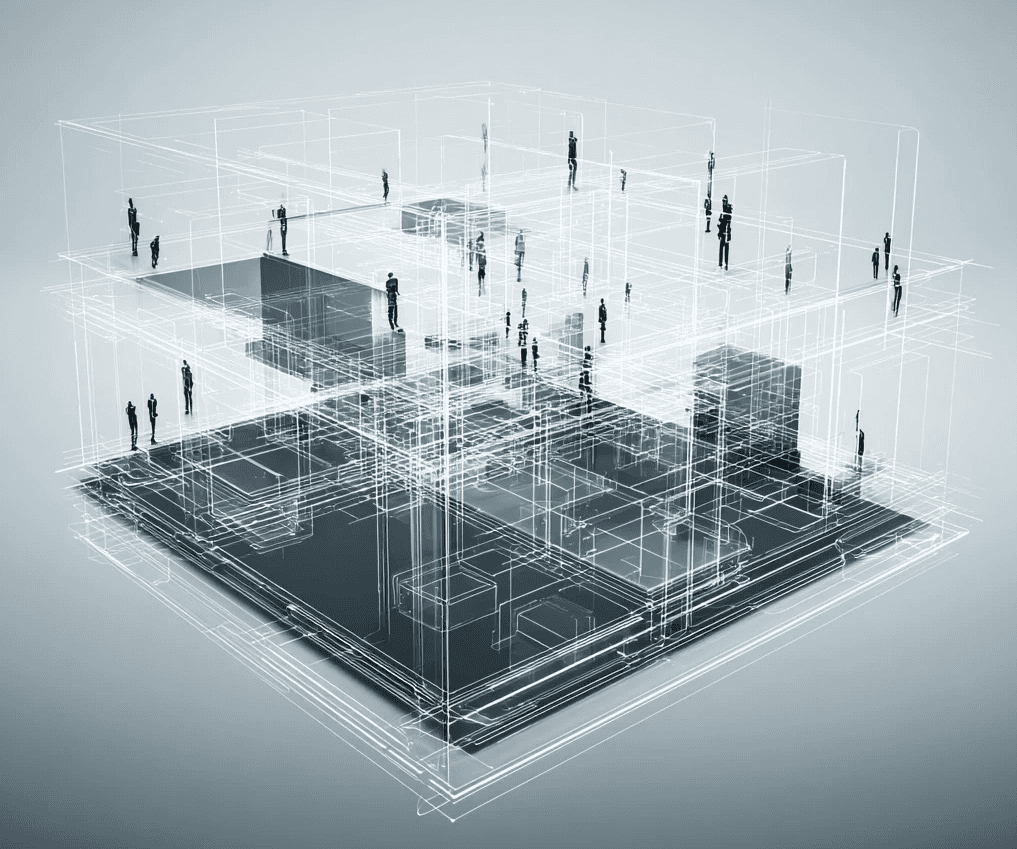
A door opening to new opportunities inside factories and organizations

Public discussion is full of prophetic predictions: soon we won’t need programmers, AI will replace them, and everything we know will disappear. But the history of software teaches us again and again that reality is different. Every time a new technology made programming more accessible and simpler, the result was not a shortage of work but the opposite: new fields opened up, demand for solutions grew, and the programmer’s role changed but did not disappear.
A lesson from the history of software
Think back to the beginning. The first programmers worked with physical cables and switches to perform basic operations. Then came machine language and assembly, and later high-level languages such as COBOL and Fortran, which made the work far more accessible. At every stage the same claim was heard: “This is the end of programming.”
In practice, the opposite happened. The number of programmers grew, the range of solutions expanded, and new industries were born. When BASIC became accessible even to children and entrepreneurs, it seemed the profession had become too simple. In fact, it was the start of an era in which software entered almost every home and every business.
The same pattern repeated in the 1990s with operating systems. Previously, every computer manufacturer had to write its own drivers to control the hardware. The arrival of Windows and macOS looked like a move that would reduce the need for programmers, but in fact it opened the market to countless new programs, broadened the user base and accelerated demand for applications.

The AI wave: the profession is changing, not disappearing
The current AI wave is similar in essence, and probably more intense. It is true that today you can write a basic prototype by talking to a language model, but that does not eliminate the profession; it changes it. A programmer is now measured by the ability to connect business requirements, development and testing, and to make sure the system truly serves the organization’s goals.
In fact, the new tools make it possible, for the first time, to connect stages that used to be separate. You can phrase a business requirement, see code built almost in real time, run tests and fix things on the fly. This is a conceptual shift that lets organizations respond faster to the market, ship products at a completely different pace and build far more flexible processes.
What this means for factories
In industrial plants, this means not only saving time but opening opportunities to enter areas that were not worth touching before. If it was once hard to justify investing in a quality-control solution for a specific point on the production line, today AI makes it possible to build a quick module, test it and integrate it into an existing system.
That way a plant can extend quality control, add new inspection stations, collect more data and improve processes, without huge, expensive projects.
History shows that demand does not disappear; it only grows. Every time programming became more accessible, new fields of activity emerged. The same is happening now.
Human roles are changing, but they are not disappearing. The human in the loop remains critical: someone has to define the requirements, understand the exceptions, connect technological capabilities to business reality and make sure the system actually works.
The message for managers
The real message for managers is simple: this is not the time to stand on the sidelines. Those who choose to ignore it will find the gap with their competitors only growing.
Those who step in now, learn and experiment will be able to turn the new tools into a clear competitive advantage. This is not the end of programming. It is the beginning of an era in which software will solve more and more problems and, thanks to AI, reach into worlds that once seemed closed to it.
From the field: what AI-assisted development looks like in practice
In a program we are delivering for a global manufacturer of advanced industrial equipment, AI-assisted development follows a defined path rather than free-form prompting: requirements verification, planning, breaking the work into tasks, coding with AI, generating tests, human review and documentation. Each change reaches the pull request with an evidence pack – the generated tests, their results, traceability links and a GO / CONDITIONAL-GO / NO-GO recommendation.
The developer’s role does not shrink; it shifts. The AI can flag that a “bug” is really a new requirement, but a person decides. The AI recommends, and the developer remains fully accountable for the code that is submitted. The program’s goal is concrete – substantially fewer bugs found in QA – and it is pursued with engineers in charge, not replaced.
Read the full case study: Three AI Capabilities, One Backbone
Further reading: When AI Tools Reach the Field · How to Lead Transformation in the GenAI Era
Other articles that may interest you

All rights reserved to Data Raven Technologies